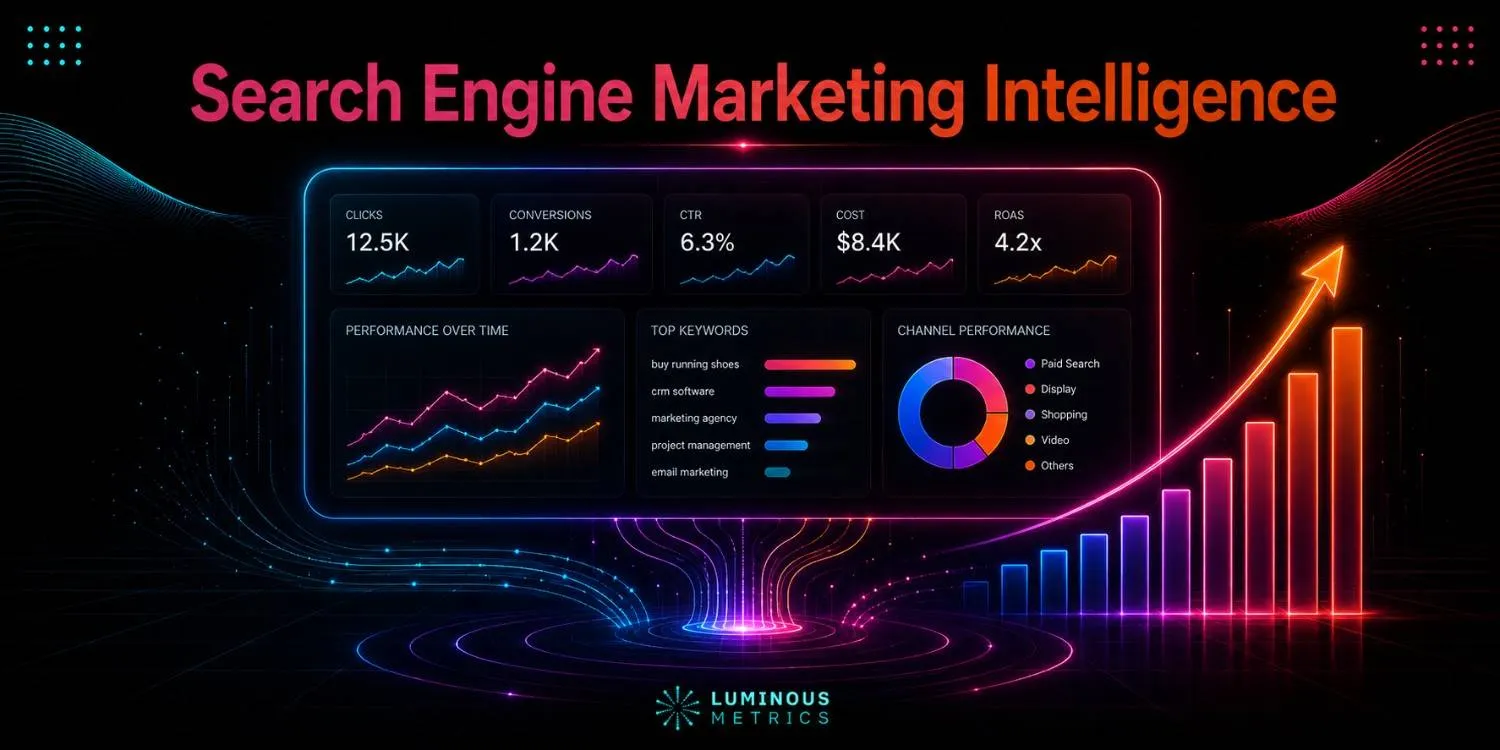
Search engine marketing intelligence is becoming the difference between teams that simply react to paid search results and teams that truly understand what is happening behind the numbers.
If you have ever seen your cost per click suddenly rise and wondered why, this is exactly where search engine marketing intelligence becomes valuable. It helps you move beyond guessing and gives you a clearer view of what is driving performance, where your budget is going, and what actions you should take next.
In this guide, we'll break down what search engine marketing intelligence really means, the data and tools behind it, the KPIs worth watching, and the strategies and trends that matter right now.
Related article: AI for Google Ads vs Smart Bidding.
Defining Search Engine Marketing Intelligence
So, what is search engine marketing intelligence? Put simply, it's the decision-making layer behind paid search. Instead of looking at campaign results in isolation, it brings together:
- Platform data
- Auction insights
- SERP data
- Competitor activity
- Conversion data
Teams can then understand what is really happening and make better decisions with more confidence.
The term “search engine marketing intelligence” isn't fully standardized. Different platforms and vendors may define it slightly differently, which is why it can feel a little unclear at first. Some people use the shorter phrase “search marketing intelligence,” but the main idea is the same: using search data to:
- Plan smarter
- Optimize faster
- Measure performance more clearly
What makes SEM intelligence different is where it fits. It sits between daily campaign management and bigger business strategy. It uses native platform data to understand what is happening inside your paid search account, then adds third-party data and public SERP insights to give you a wider view of the market.
Today, search intelligence needs to account for AI Overviews, AI Mode, Copilot Search, and other answer-first search experiences. These surfaces are changing where ads appear, how people interact with search results, and what marketers need to measure next.
Luminous Metrics combines digital marketing expertise with AI-powered technology to produce dashboards, reports, and recommendations — including insights into organic and paid search performance. That combination of human expertise and an AI-driven platform gives the company a significant advantage over its competitors.
SEM Intelligence vs. SEO, SEM, and Competitive Intelligence
These terms get mixed up constantly, so a quick comparison helps:
| Discipline | Primary Goal | Typical Data |
|---|---|---|
| SEO | Improve unpaid visibility | Search Console, rankings, crawl data |
| SEM | Buy and manage paid placements | Ad platforms, bids, ad copy |
| Marketing intelligence | Understand market and customer behavior broadly | Surveys, sales data, channel analytics |
| Competitive intelligence | Monitor rival strategy and positioning | Competitor ads, spend estimates, market share |
| SEM intelligence | Improve paid-search decisions using all of the above | Platform truth + SERP, panel, and CRM data |
In a nutshell:
- SEM is the practice of running paid search campaigns, while SEO is about earning visibility organically without paying for each click.
- Search engine marketing intelligence connects these ideas, but gives them a more focused purpose. It borrows from marketing intelligence and competitive intelligence, then applies those insights specifically to paid-search decisions.
The goal is to help teams make smarter choices by using every useful data stream available — paid search performance, SEO signals, competitor activity, SERP changes, and the AI-powered search surfaces that now appear alongside traditional results.
In other words, SEM intelligence isn't just about managing ads. It's about understanding the full search environment so you can spend more wisely, react faster, and make better decisions with more confidence.
Where Lumis fits
Lumis AI is an SEM intelligence agent built to help marketers see the bigger picture behind their campaigns — turning complex search data into clear, actionable insights so teams get a deeper understanding of performance, opportunities, risks, and next steps across their projects.
Structuring Your Search Engine Marketing Analysis
A strong search engine marketing analysis goes beyond watching every metric in the same way. Instead, it organizes performance into four clear levels, moving from basic campaign visibility to the business results your advertising actually creates.
The Four KPI Levels to Track in SEM Intelligence
Key performance indicators, or KPIs, are measurable targets that show how well you are progressing toward your most important business goals. While a company may track many different metrics, KPIs focus only on the measures that have the greatest impact on its success.
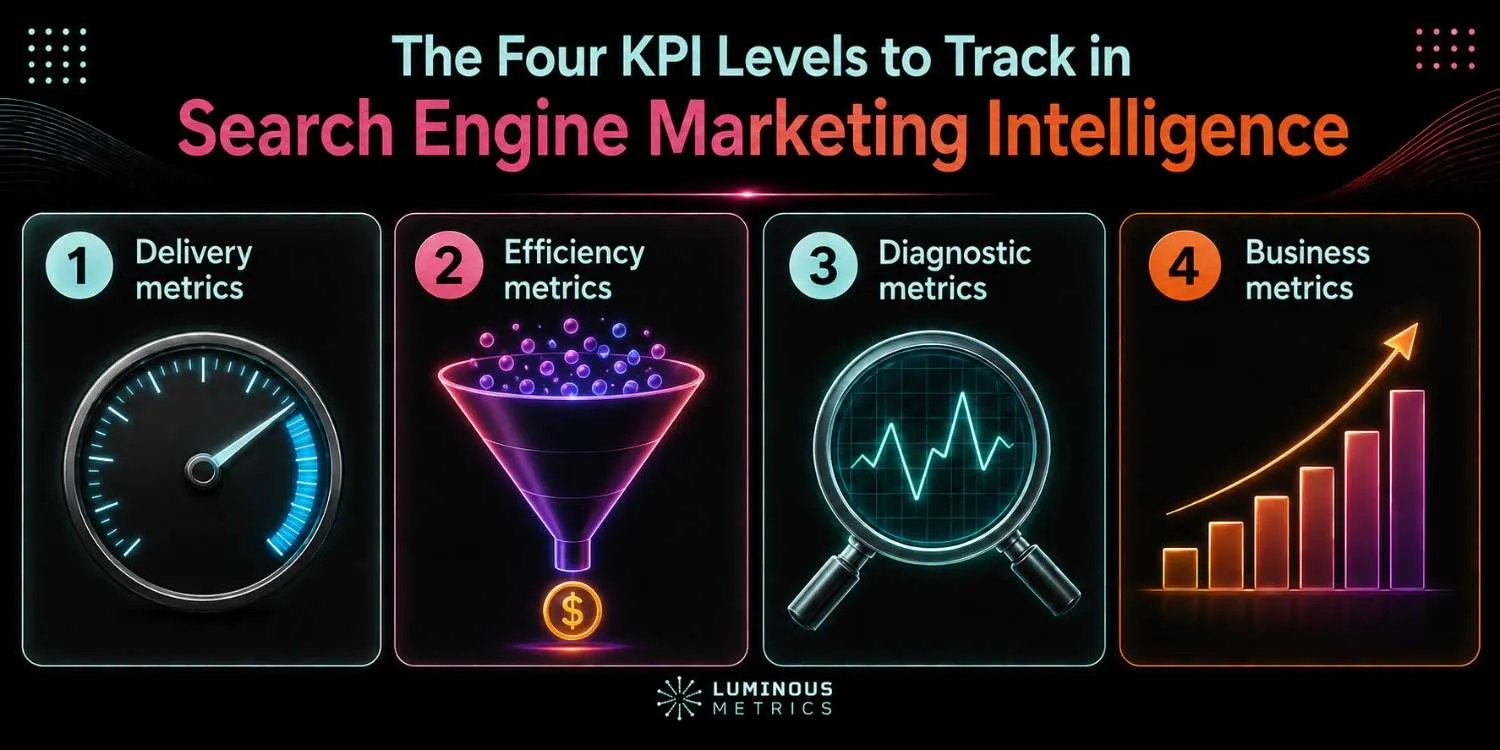
Delivery metrics
Impressions and impression share show how visible your ads are and how much of the available search opportunity you are capturing.
Efficiency metrics
CTR, CPC, and conversion rate reveal how efficiently your campaigns attract clicks and convert them into actions. These are the day-to-day performance numbers most teams already monitor.
Diagnostic metrics
Quality Score and lost impression share help explain why performance may be improving or declining. They're especially useful for identifying issues related to budget, ad relevance, and ad rank.
Business metrics
Incremental conversions, incremental CPA, and incremental ROAS show the real value of your advertising by measuring what happened as a result of your spend — not simply what happened after someone clicked an ad.
Applying Search Engine Marketing Intelligence Strategies
Improving paid-search intelligence isn't just about understanding the data. It's about knowing how to use it.
- Start by looking beyond the final click and use data-driven attribution to understand the full customer journey.
- Run incrementality tests to see what your advertising spend is actually contributing to, rather than relying only on attributed conversions. Automated bidding can handle much of the day-to-day optimization, but it still needs regular human oversight.
- Build anomaly detection into your reporting so you can catch sudden increases in CPC, tracking issues, or performance drops before they become costly problems.
Building Your Search Engine Marketing Intelligence Practice
You don't need a huge budget or a complicated tech stack to build strong search marketing intelligence. Just start with the basics:
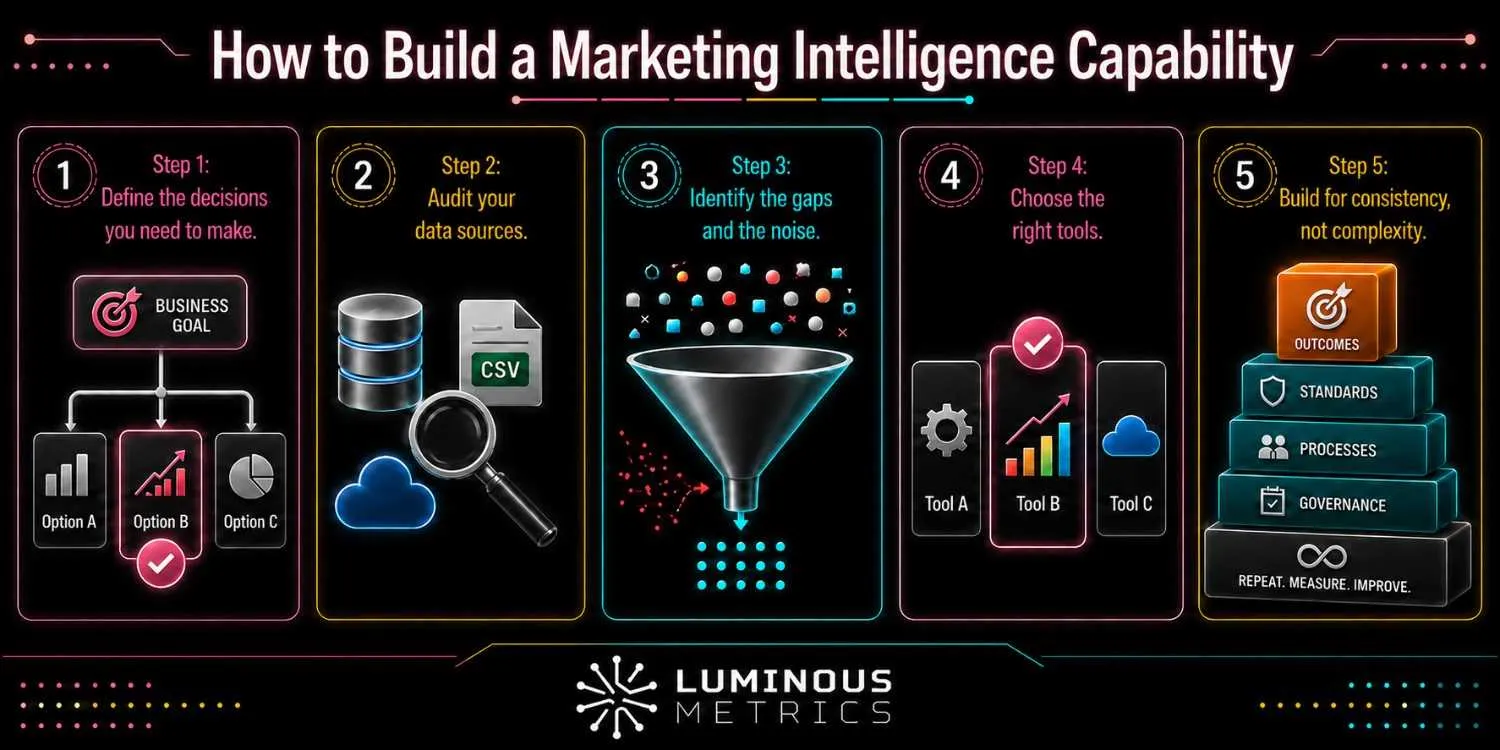
- Clean up your data
- Bring your key metrics into one dashboard
- Connect your ad spend to real revenue
Once that foundation is in place, you can begin testing what is truly driving results and keep a closer eye on competitors. The goal isn't to collect more tools — it's about choosing the right ones and making sure they work together.
Final Words on Search Engine Marketing Intelligence
SEM intelligence isn't about having more dashboards or tools — it's about using reliable data, understanding what each metric can tell you, and turning those insights into meaningful action.
The best approach is to start with clean data, connect platform performance with market context and causal testing, and build from there.
Need help making your brand more conspicuous?
Call the Luminous Metrics team and we'll help you turn search data into decisions.
Start Free TrialFAQs on Search Engine Marketing Intelligence
How is artificial intelligence being brought into search engine marketing?
Using an artificial intelligence search engine in marketing is no longer just an idea — it is already changing where ads appear and how campaigns are managed every day. It helps advertisers reach people across AI-powered search experiences, automatically adjust bids, and spot problems such as sudden spending increases or tracking issues. Even so, automation still needs a human eye, because these systems do not always behave as smoothly or predictably as expected.
How do you source the data behind search engine marketing analytics?
Strong search engine marketing analytics starts with knowing which data you can trust and what each source is actually useful for. Many teams run into problems because they treat all data the same, even though different types of data are meant to answer different questions. Combine platform truth (ad network APIs) with SERP data, panel data, and CRM data to answer the right question with the right source.